The Choquequirao Trek is one of the most rewarding adventures in Peru, but it is also one of the most physically demanding. This remote route takes travelers deep into the Andes, through the dramatic Apurímac Canyon, across steep descents, long uphill climbs, warm valley sections, cold campsites, and changing mountain weather.
Because Choquequirao is only accessible by trekking, packing correctly is essential. There are no shops, pharmacies, or ATMs along the trail. Once you leave Cusco and begin the hike, you need to have the right gear, clothing, personal items, and preparation with you.
This Choquequirao Packing List will help you bring what you really need without carrying unnecessary weight. The goal is simple: pack light, stay comfortable, protect yourself from the weather, and enjoy the trek with confidence.
Whether you are joining a guided Choquequirao trek from Cusco or preparing for your first big Andes adventure, this guide will help you understand exactly what to bring for the Choquequirao trek.
Why Packing Smart Matters on the Choquequirao Trek
Packing smart can make a big difference on the Choquequirao Trek. This is not a simple day hike or a tourist walk. It is a remote, multi-day trekking route with challenging terrain, long walking hours, and basic camping conditions.
The trail includes hot canyon sections, exposed paths, dusty switchbacks, steep downhill trails, and demanding uphill climbs. During the day, the sun can be strong. At night, temperatures can drop quickly, especially at higher campsites.
Bringing too much makes the trek harder. A heavy backpack can affect your knees, shoulders, back, and energy level. Bringing too little can affect your comfort, safety, and ability to adapt to changing weather.
That is why a practical Choquequirao trek packing list is so important.
With the right packing list and a professional local trekking team, your experience becomes smoother, safer, and more enjoyable. A reliable Cusco-based agency can help organize camping gear, mule support, meals, safe water guidance, and professional trekking support so you can focus on the journey.
Essential Daypack Items
Your daypack is the small backpack you carry while hiking each day. It should include the items you need during the walking hours, while your larger duffel or main luggage may be transported separately if your tour includes mule support.
Your daypack should be light but complete. You do not want to carry unnecessary weight, but you also do not want to be missing something important in the middle of the trail.
What to carry in your daypack:
- Passport or ID copy
- Water bottle or hydration bladder
- Rain jacket
- Warm layer
- Sun hat
- Sunglasses
- Sunscreen
- Insect repellent
- Personal snacks
- Camera or phone
- Personal medication
- Toilet paper
- Hand sanitizer
- Small cash in Peruvian soles
- Headlamp
- Lip balm with SPF
- Small plastic bag for personal waste
A comfortable daypack of around 20 to 30 liters is usually enough for most travelers. Choose one with padded shoulder straps, a waist belt, and a rain cover if possible.
For the Choquequirao camping trek, your daypack should always be ready for sun, wind, rain, and temperature changes.
Clothing for the Choquequirao Trek
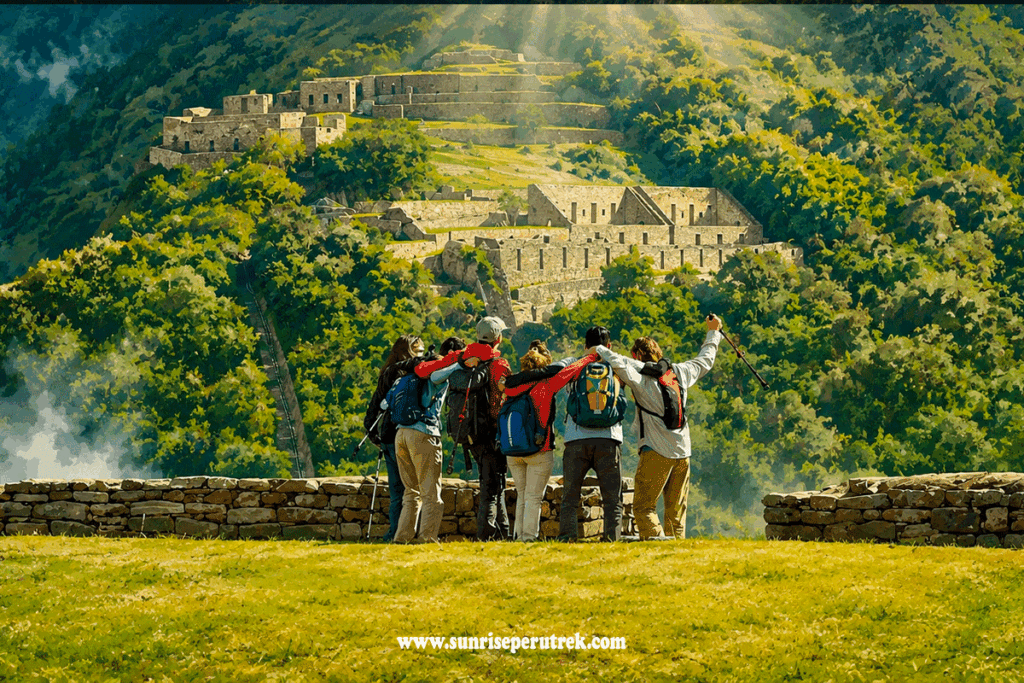
Layering is the best clothing strategy for Choquequirao trekking. Temperatures can change a lot between the Apurímac Canyon, campsites, and mountain sections.
During the day, you may feel very warm while climbing or descending. In the early morning and evening, you may need a fleece or warm jacket. At night, warm sleeping clothes are important.
Recommended clothing:
- Moisture-wicking T-shirts
- Long-sleeve trekking shirt
- Lightweight trekking pants
- Warm fleece
- Insulated jacket or warm layer
- Waterproof rain jacket
- Comfortable sleepwear
- Extra underwear
- Extra trekking socks
- Buff or neck gaiter
- Lightweight gloves
- Warm hat for cold nights
Avoid cotton clothing for trekking. Cotton dries slowly, holds moisture, and can make you feel cold when temperatures drop. Quick-dry and moisture-wicking fabrics are much better for a multi-day Peru trekking packing list.
Lightweight trekking pants are better than jeans. Jeans are heavy, uncomfortable when wet, and not suitable for long hiking days.
Footwear: What Shoes to Bring
Footwear is one of the most important decisions on your Choquequirao Packing List. The route has steep downhill sections, loose dirt, rocky paths, and long climbs. Your feet need support, comfort, and protection.
Recommended footwear:
- Broken-in hiking boots
- Comfortable trekking socks
- Camp shoes or sandals
- Blister protection
Your hiking boots should be comfortable and already tested before the trek. Never wear brand-new boots for the first time on the Choquequirao Trek. New boots can cause painful blisters, pressure points, and discomfort.
Good ankle support is highly recommended because the trail includes uneven terrain and long descents. Steep downhill sections can be hard on knees, ankles, and feet, so stable footwear matters.
Camp shoes or sandals are also useful. After a long hiking day, it feels great to remove your boots and let your feet rest at camp.
Bring quality trekking socks, not regular cotton socks. Good socks help reduce friction, moisture, and blisters.
Weather Protection
Weather in the Andes can change quickly. Even during the dry season, travelers should be prepared for strong sun, wind, cold mornings, cold nights, and possible rain.
The Choquequirao Trek passes through different elevations and microclimates. You may experience hot canyon temperatures during the day and cold conditions at camp in the evening.
Weather protection essentials:
- Waterproof rain jacket
- Backpack rain cover
- Sun hat
- Sunglasses
- High-SPF sunscreen
- Lip balm with SPF
- Lightweight gloves
- Warm hat
- Dry bags or plastic bags for clothes and electronics
Sun protection is very important on the Apurímac Canyon trek. The sun can be intense, especially on exposed sections of the trail. Apply sunscreen regularly and protect your face, neck, lips, and arms.
Dry bags are useful for protecting clothes, electronics, documents, and personal items. Even if it does not rain, dust and moisture can still affect your gear.
Camping Items
Choquequirao is a remote camping trek. If you book with a professional local trekking agency, major camping equipment is usually included, which makes packing much easier.
A reliable agency may provide:
- Tents
- Sleeping mats
- Dining tent
- Cooking equipment
- Kitchen tent
- Meals
- Mule support for shared gear
This is one of the biggest advantages of booking a guided Choquequirao tour. Instead of carrying all the heavy camping equipment yourself, the local team organizes the logistics and helps make the trek more comfortable.
What travelers may still need to bring or rent:
- Sleeping bag suitable for cold nights
- Inflatable pillow or small travel pillow
- Headlamp
- Personal toiletries
- Warm sleeping clothes
Before arrival, always check with your agency to confirm what is included and what can be rented. Some companies include sleeping mats but not sleeping bags. Others offer sleeping bag rental in Cusco.
For cold nights, choose a sleeping bag suitable for mountain conditions. Even if the day feels warm, temperatures can drop at camp.
Toiletries and Personal Care
Personal care items should be simple, small, and practical. You do not need full-size bottles or heavy toiletry bags. Bring only what you need for the number of trekking days.
Recommended toiletries:
- Toothbrush and toothpaste
- Biodegradable soap
- Small towel
- Wet wipes
- Toilet paper
- Hand sanitizer
- Moisturizer
- Lip balm
- Hair ties if needed
- Personal hygiene products
- Small trash bag
Wet wipes are very useful on a camping trek, especially when showers are limited or unavailable. A small quick-dry towel is better than a large cotton towel.
Responsible trekking is important in Choquequirao Peru. Always carry out personal waste when necessary and avoid leaving toilet paper, plastic, or hygiene products on the trail.
A good local trekking agency will explain responsible trekking practices during the pre-trek briefing.
Health and First Aid Items
Choquequirao is remote, so personal health items are very important. Your guide may carry a basic first aid kit, but you should still bring your own personal medication and essentials.
Health and first aid items to pack:
- Personal medication
- Basic pain reliever
- Blister pads
- Band-aids
- Rehydration salts
- Anti-diarrhea medicine
- Motion sickness medicine if needed
- Insect bite cream
- Allergy medication if needed
- Any prescription medicine
If you take prescription medicine, bring enough for the entire trek plus extra in case of delays.
Travelers should inform the agency in advance about allergies, medical conditions, dietary restrictions, or special health concerns. This helps the trekking team prepare better meals, safety support, and emergency planning.
Good communication before the trek is part of safe Choquequirao trekking.
Documents and Money
Even though the Choquequirao Trek is remote, you still need to bring essential documents and some cash.
Important documents and money:
- Original passport or ID
- Passport copy
- Travel insurance details
- Emergency contact information
- Booking confirmation
- Small cash in Peruvian soles
There are no ATMs on the trail. Bring small cash in soles for tips, small personal expenses, or emergency purchases before and after the trek.
Do not bring too much cash. You only need enough for basic extras, tips, and small expenses. Keep your money and documents in a waterproof bag inside your daypack.
Travel insurance is strongly recommended for adventure travel in Peru, especially for remote trekking routes.
Electronics and Photography Gear
Choquequirao is a beautiful place for photography. The landscapes are dramatic, the canyon views are impressive, and the archaeological site feels remote and peaceful.
However, electricity is not available at most campsites, so you should plan carefully.
Useful electronics:
- Phone
- Camera
- Power bank
- Charging cable
- Extra batteries
- Memory card
- Waterproof bag for electronics
- Headlamp with extra batteries
A power bank is one of the most useful items on your Choquequirao hiking gear list. It helps keep your phone, camera, or headlamp charged during the trek.
Bring extra memory cards if you enjoy photography. You may take more photos than expected.
Keep electronics protected from dust, rain, and humidity. A waterproof bag or dry bag is highly recommended.
Snacks and Hydration
Even if meals are included in your guided trek, it is a good idea to bring personal snacks. Snacks help maintain energy during long hiking days, especially on uphill sections.
Recommended snacks:
- Energy bars
- Trail mix
- Chocolate
- Dried fruit
- Electrolyte tablets
- Nuts
- Reusable water bottle or hydration bladder
A local agency usually provides meals and may help with safe drinking water, but you should always confirm the details before departure.
Hydration is very important on the Choquequirao Trek. Hot canyon sections can make you sweat more than expected. Electrolyte tablets can help replace minerals during long trekking days.
Avoid bringing too many heavy snacks. Choose lightweight, high-energy options.
Optional Items That Can Help
Some items are not essential but can make the trek more comfortable. The key is to bring useful extras, not unnecessary weight.
Helpful optional items:
- Trekking poles
- Lightweight towel
- Travel pillow
- Earplugs
- Small notebook
- Lightweight book
- Knee support
- Gaiters during rainy season
- Compression bags
Trekking poles are especially useful for the steep descents and climbs of the Apurímac Canyon trek. They can reduce pressure on knees and improve balance on loose terrain.
Compression bags are helpful for organizing clothing and saving space.
Earplugs can be useful at campsites if you are a light sleeper.
Optional items should improve your comfort, not make your backpack heavy.
What Not to Bring
Packing light is one of the best Choquequirao packing tips. Many travelers bring too much because they are nervous. However, unnecessary weight can make the trek more difficult.
Avoid bringing:
- Heavy suitcases
- Too many clothes
- New hiking boots
- Expensive jewelry
- Unnecessary electronics
- Large bottles of toiletries
- Cotton jeans
- Heavy books
- Too much cash
- Single-use plastic items
Heavy suitcases are not suitable for trekking. Leave your main luggage in Cusco and pack only what you need for the trail.
Do not bring expensive jewelry or valuables. The trek is about nature, adventure, and simplicity.
Avoid single-use plastic items whenever possible. Choquequirao is a special and remote place, and travelers should help protect it.
The lighter and smarter you pack, the more comfortable your trek will be.
Packing Tips for the Dry Season
The dry season, generally from April to October, is considered the best time for Choquequirao trekking. Days are usually clearer, and trail conditions are often better than during the rainy season.
However, dry season does not mean you should pack only light clothing. You still need to prepare for cold mornings, cold nights, wind, and strong sun.
Dry season packing tips:
- Bring strong sun protection
- Pack warm clothes for cold nights
- Use light clothes for hot canyon sections
- Carry a rain jacket just in case
- Bring a buff for dust protection
- Use sunglasses with good UV protection
- Keep lip balm with SPF in your daypack
The trail can be dusty during the dry season, especially on exposed paths. A buff or neck gaiter is very useful for dust, sun, and wind.
Even in the best trekking months, Andean weather can change. Always bring a rain jacket.
Packing Tips for the Rainy Season
The rainy season, generally from November to March, requires extra preparation. Trails can be muddy, slippery, and more challenging. Rain protection becomes much more important.
Rainy season trekking should be done with experienced local support. A professional guide and organized trekking team can make a big difference in safety, comfort, and decision-making.
Rainy season packing tips:
- Waterproof jacket
- Backpack rain cover
- Dry bags
- Extra socks
- Quick-dry clothes
- Waterproof boots
- Trekking poles
- Gaiters if available
Waterproof boots are very useful in rainy conditions. Extra socks are also important because wet feet can quickly cause blisters and discomfort.
Dry bags help protect clothing, electronics, and documents. Even a simple plastic bag can help keep important items dry.
Trekking poles are especially helpful when trails become slippery.
Packing for a Guided Choquequirao Trek
Packing is much easier when you book with a professional local Cusco-based trekking agency. Choquequirao is remote, and good organization makes a big difference.
A guided Choquequirao trek from Cusco usually includes support that independent travelers do not have. This can make the experience safer, more comfortable, and more enjoyable.
Benefits of booking with a local agency:
- Pre-trek briefing
- Clear packing advice
- Camping gear organized
- Mule support
- Meals included
- Safe water guidance
- Emergency support
- Gear rental options
- Local weather advice
- Experienced mountain guides
A professional agency will explain what you need to bring, what is included, and what can be rented in Cusco. They can also help you prepare for weather conditions, trail difficulty, camping expectations, and daily hiking routines.
For first-time trekkers, this support is very valuable. The Choquequirao Trek is not a place to improvise. Preparation, organization, and local experience matter.
Booking reliable Choquequirao tours from Cusco helps travelers reduce stress and enjoy the adventure with more confidence.
Final Choquequirao Packing Checklist
Use this final checklist to prepare your backpack before leaving Cusco.
Daypack
- Water
- Rain jacket
- Warm layer
- Sunscreen
- Snacks
- Personal medicine
- Headlamp
- Camera or phone
- Toilet paper
- Hand sanitizer
- Insect repellent
- Small cash in soles
- Passport or ID copy
Clothing
- Trekking shirts
- Long-sleeve shirt
- Trekking pants
- Fleece
- Warm jacket
- Rain jacket
- Trekking socks
- Underwear
- Sleepwear
- Buff or neck gaiter
- Warm hat
- Lightweight gloves
Footwear
- Hiking boots
- Camp shoes
- Trekking socks
- Blister protection
Personal Items
- Toiletries
- Wet wipes
- Hand sanitizer
- Toilet paper
- Small towel
- Lip balm
- Moisturizer
- Personal hygiene products
- Small trash bag
Documents
- Passport
- Passport copy
- Insurance details
- Booking confirmation
- Emergency contact information
- Cash in soles
Extras
- Power bank
- Trekking poles
- Dry bags
- Insect repellent
- Sunglasses
- Camera batteries
- Memory card
- Travel pillow
- Earplugs
- Knee support if needed
Conclusion: Pack Light, Prepare Well, and Trek with Confidence
A well-prepared backpack can change your Choquequirao experience. When you bring the right clothing, footwear, weather protection, personal items, documents, and health essentials, you can enjoy the trek with more comfort, confidence, and safety.
The Choquequirao Trek is remote, beautiful, and physically demanding. It rewards travelers who prepare well. Pack light, choose practical gear, protect yourself from changing weather, and avoid carrying unnecessary weight.
Most importantly, consider booking your adventure with a trusted local trekking agency in Cusco. A professional team can provide clear packing guidance, camping logistics, mule support, meals, safe water advice, emergency assistance, and experienced guides who know the trail.
Need help preparing for your Choquequirao adventure? Contact our local Cusco trekking experts and let us help you choose the right itinerary, packing list, and trekking support for your journey.
Book your Choquequirao Trek from Cusco and get ready for one of Peru’s most unforgettable trekking adventures.