
The Choquequirao Trek is one of Peru’s most rewarding and challenging trekking routes. It is wild, remote, physical, and unforgettable. For hikers who want more than a classic tourist visit, the Choquequirao trail offers a real Andean adventure through deep canyons, steep mountain paths, quiet villages, and dramatic views.
Many travelers hear about Choquequirao as the “hidden Inca city,” but they do not always understand what the trail is really like. This is not an easy walk to an archaeological site. It is a demanding mountain route that requires effort, patience, and a strong attitude.
The Choquequirao trek route is famous for steep canyon descents, long uphill climbs, powerful Apurímac Canyon views, and a deep feeling of remoteness. That is exactly what makes it so special.
If you are wondering, “What is the Choquequirao trek like?” this guide explains the real trail experience from Cusco to Choquequirao, including terrain, campsites, difficulty, climate changes, daily rhythm, and practical trekking tips.
What Is the Choquequirao Trek Route Like?
The Choquequirao trek route is a demanding mountain trail, not a flat scenic walk. It combines long descents, steep climbs, warm canyon sections, cooler mountain campsites, and remote landscapes where nature feels powerful and untouched.
Along the Choquequirao trail, hikers should expect a mix of:
Dirt trails, rocky paths, steep descents, long uphill sections, hot canyon areas, cold nights at campsites, quiet Andean villages, remote farming zones, and impressive Apurímac Canyon views.
This is one of the reasons the Choquequirao Peru trek feels so authentic. There is no train, no easy road to the ruins, and no simple shortcut. You reach Choquequirao by walking, step by step, through one of the most dramatic landscapes in southern Peru.
The Choquequirao trekking route is physically challenging, but deeply rewarding. Every descent, every climb, and every viewpoint becomes part of the experience.
Where Does the Choquequirao Trek Start?
Most Choquequirao treks begin with an early drive from Cusco to a trailhead area such as Capuliyoc, Cachora, or nearby access points. The exact starting point may vary depending on the itinerary, road conditions, weather, and the logistics of your tour operator.
Capuliyoc is one of the most commonly used starting points because it offers spectacular panoramic views of the Apurímac Canyon before the hiking begins. From here, travelers can already understand the scale of the adventure ahead.
Some itineraries describe the route as Capuliyoc to Choquequirao, while others refer to the traditional Cachora to Choquequirao access. In practice, both are connected to the same trekking region and may be used depending on the operator and road access.
The Choquequirao route from Cusco usually starts with several hours of driving before the real hiking begins. Once you arrive at the trailhead, the mountains open in front of you, and the remote feeling begins immediately.
The First Part of the Route: From the Trailhead to the Canyon
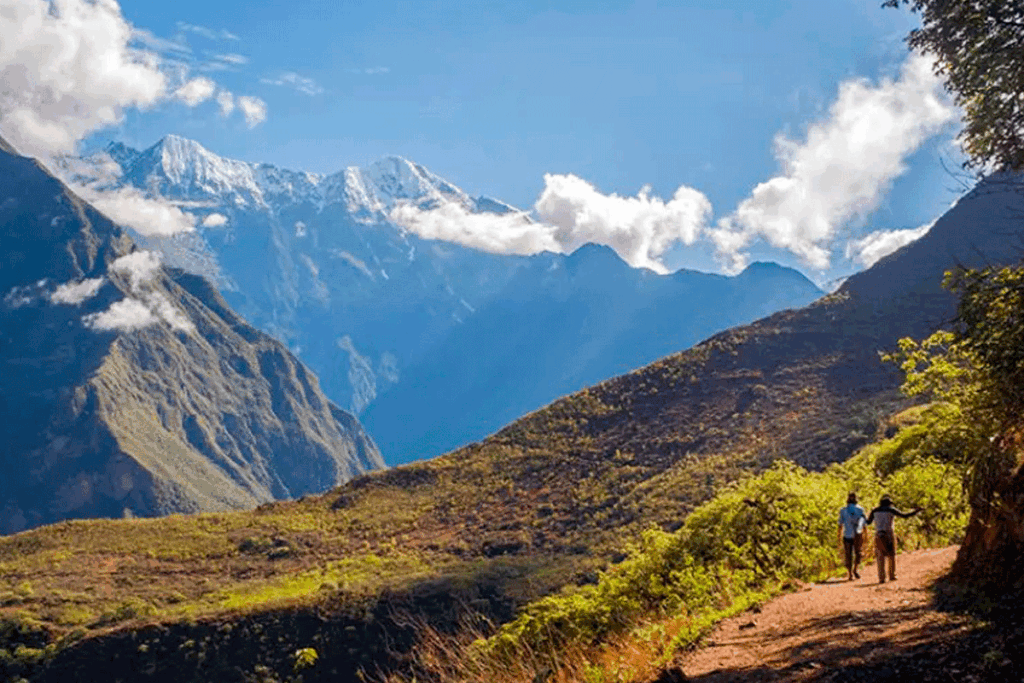
The beginning of the Choquequirao hike is impressive. Hikers usually start with wide views over the Apurímac Canyon, distant mountains, dry Andean hillsides, and a trail that begins to descend toward the valley.
This first section can feel exciting because the scenery is open and dramatic. However, it can also be demanding. The trail often descends gradually and then more steeply, placing pressure on the knees, ankles, and leg muscles.
Many hikers underestimate descents. Going downhill may feel easier than climbing, but on the Choquequirao trek route, the descent is long enough to become tiring. This is where trekking poles are very helpful.
Good hiking shoes, controlled pacing, sun protection, and patience are important from the first day. Do not rush the descent. A slow and steady rhythm helps protect your knees and saves energy for the climbs ahead.
Descending into the Apurímac Canyon
One of the most defining parts of the Choquequirao trekking route is the descent into the Apurímac Canyon. This section shows the wild character of the trek.
The landscape is often dry, open, and exposed. The trail may include switchbacks, dusty paths, rocky sections, and wide canyon views. In the dry season, hikers may deal with dust and strong sun. During the rainy season, some sections can become muddy or slippery.
As you descend, the temperature usually becomes warmer. The canyon environment can feel intense, especially under the midday sun. The air feels drier, the trail feels lower, and the mountains rise dramatically around you.
This section is beautiful, but it demands respect. The descent can be hard on the legs, especially for hikers who are not used to long downhill routes. Trekking poles, proper footwear, and a careful pace make a big difference.
Crossing the Apurímac River Area
The lower canyon zone near the Apurímac River is one of the warmest parts of the Choquequirao trail. After descending from the high viewpoints, hikers reach a lower, hotter environment where the sun can feel stronger and the effort becomes more noticeable.
This area is an important transition point on the route. The descent is behind you, but the climb toward Choquequirao is still ahead.
Hydration is essential here. Hikers should drink enough water, use sunscreen, wear a hat, and listen carefully to the guide’s pacing advice. Moving too fast in the heat can quickly drain your energy.
The river area also gives hikers a powerful sense of the route’s geography. You can feel how deep the canyon is and how much climbing will be required to reach the opposite side. This is where many trekkers realize that Choquequirao is not just a destination; it is a true physical journey.
The Big Climb Toward Choquequirao
After descending into the canyon, the big climb begins. This is one of the hardest parts of the Choquequirao trek route.
The trail climbs steadily through long uphill sections and steep switchbacks. The pace becomes slower. Breaks become more frequent. The body works hard, and mental strength becomes just as important as physical fitness.
This climb is demanding because it comes after a major descent. Your legs have already worked hard, and now they must push uphill for several hours. The heat in the lower sections can make the climb feel even more intense.
However, the views change beautifully as you gain altitude. The canyon opens behind you, the mountains become wider, and the landscape slowly transforms. Each higher section brings a new perspective.
The climb toward Choquequirao is not easy, but it is one of the most rewarding parts of the trek. It prepares you emotionally for the arrival at one of Peru’s most impressive hidden Inca sites.
Approaching the Choquequirao Archaeological Site
As hikers get closer to Choquequirao, the feeling of the trail begins to change. The scenery becomes greener, quieter, and more mysterious. The dry canyon landscapes slowly give way to cloud forest areas, mountain vegetation, and views of terraces hidden among the slopes.
This part of the Choquequirao trail feels special. After the long descent and difficult climb, every step closer to the archaeological site feels earned.
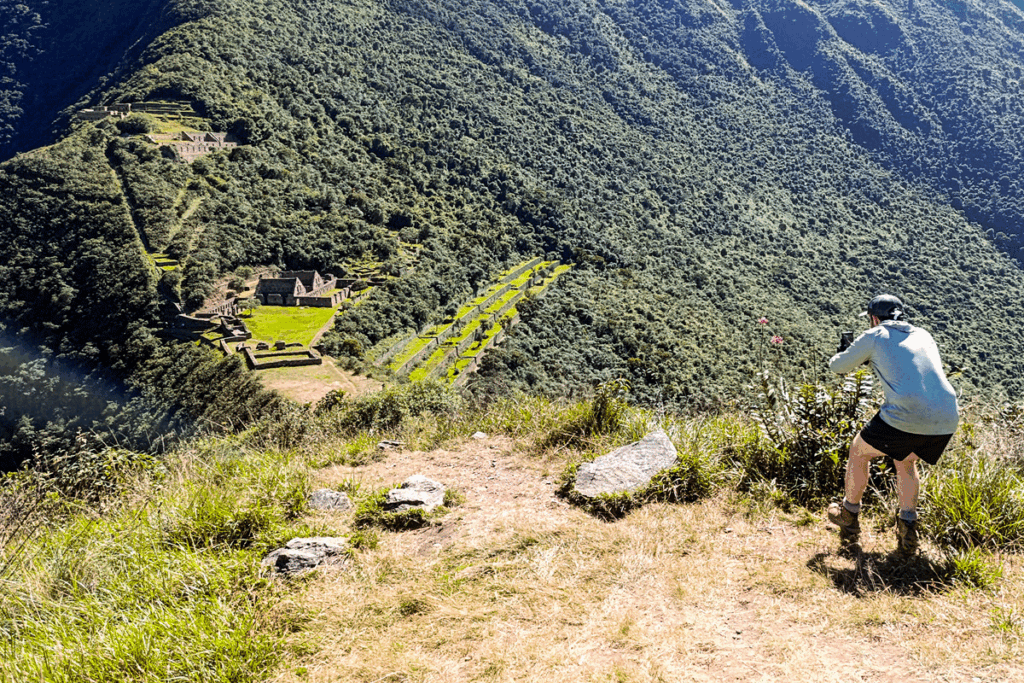
You may begin to see terraces, mountain ridges, forested slopes, and wide views over the surrounding valleys. The atmosphere becomes more powerful because Choquequirao does not appear suddenly like a tourist attraction. It feels like a remote place gradually revealing itself.
Arriving near Choquequirao is emotional. Hikers often feel tired, proud, quiet, and amazed at the same time. The remoteness of the route makes the arrival feel much more meaningful.
What You See Along the Trail
The Choquequirao trek route is full of changing landscapes. The beauty of the trail is not only at the archaeological site, but throughout the journey.
Visual highlights along the route may include:
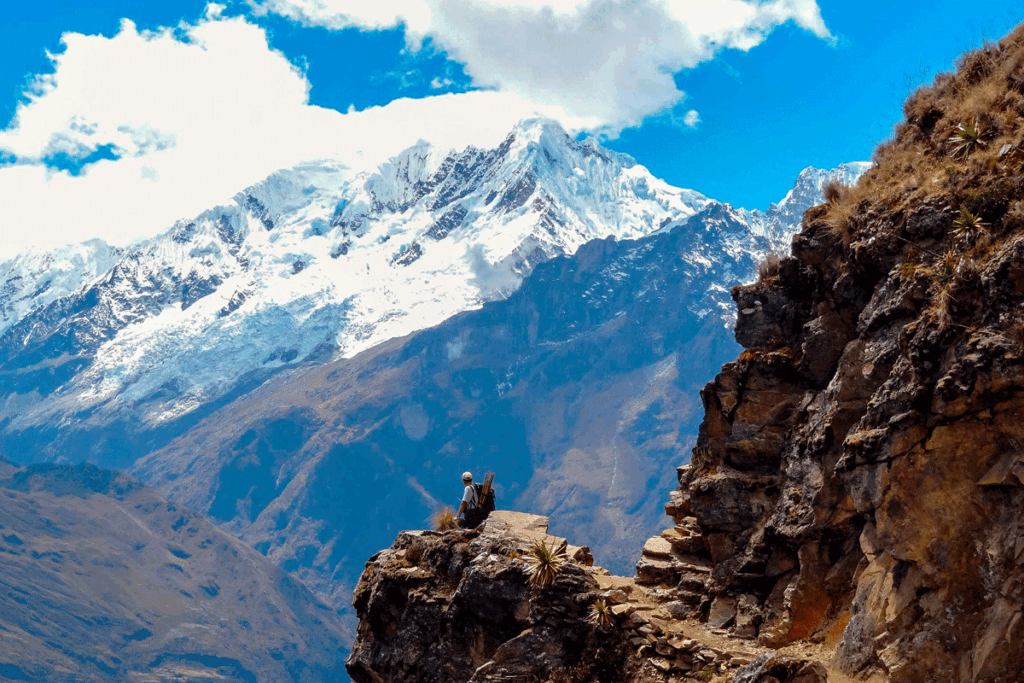
Apurímac Canyon viewpoints with dramatic mountain depth.
Snow-capped mountains in the distance on clear days.
Native plants, flowers, and dry Andean vegetation.
Dusty valley landscapes during the dry season.
Greener cloud forest areas as you approach Choquequirao.
River views in the lower canyon zone.
Andean farming zones and quiet rural communities.
Remote campsites surrounded by mountains and silence.
Choquequirao terraces built into the slopes.
The famous llama terraces, one of the most memorable visual rewards of the route.
These highlights make the Choquequirao hike feel diverse and alive. The trail constantly changes, and every section has its own personality.
Campsites on the Choquequirao Route
Choquequirao campsites are simple, remote, and surrounded by nature. Travelers should expect mountain camping, not luxury accommodation.
Depending on the itinerary, campsites may be located in lower canyon areas, near small villages, or closer to the Choquequirao archaeological zone. Facilities are usually basic, and comfort depends greatly on the organization of your trekking agency.
A typical camping experience may include tent camping, outdoor dining areas, limited facilities, cold nights, early mornings, quiet surroundings, and beautiful night skies.
The simplicity is part of the adventure. At night, the trail becomes silent. There are no city lights, no traffic, and no crowds. Just mountains, stars, and the feeling of being far away from ordinary travel routes.
A good local agency makes the camping experience much more comfortable and organized. Proper tents, clean meal service, experienced cooks, muleteers, and a responsible support team can make a big difference after a long day of hiking.
How Difficult Is the Choquequirao Trek Route?
The Choquequirao trek difficulty is considered challenging. This is one of the most important things hikers should understand before booking.
The route is difficult mainly because of the steep descents, long ascents, heat in the canyon, remote terrain, altitude changes, and several hours of walking per day. It is not technically extreme, but it is physically demanding.
You do not need to be a professional athlete to complete the Choquequirao trek from Cusco. However, you should have good fitness, healthy knees, some hiking experience if possible, and a positive attitude.
The hardest part for many hikers is not one single moment. It is the combination of going down, crossing the canyon, climbing back up, camping remotely, and repeating long walking days.
This is why choosing the right itinerary matters. A 3-day Choquequirao Trek route is much more intense, while the 4-day Choquequirao Trek and 5-day Choquequirao Trek options usually allow a better pace. Travelers should choose according to their fitness level, available time, and trekking experience.
Trail Conditions by Season
Choquequirao trail conditions change depending on the season. Understanding the weather helps hikers prepare properly.
Dry Season
The dry season usually offers drier paths, clearer views, and more stable trekking conditions. This is one of the best times for hikers who want better visibility and lower chances of rain.
However, dry season does not mean easy. Some sections can be dusty, the sun can be strong during the day, and nights at campsites can be cold. Hikers should bring sun protection, warm layers, and enough water.
Rainy Season
During the rainy season, the Choquequirao trail can become muddy and slippery. Descents may require extra care, and some sections can feel more tiring because of wet ground.
The landscapes are usually greener, the vegetation is more alive, and the atmosphere can feel more dramatic. However, clouds, rain, slippery paths, and possible delays are real considerations.
Waterproof gear is essential during this period. Good boots, rain jacket, backpack cover, and quick-dry clothing are highly recommended.
Shoulder Months
April, May, September, and October often offer a good balance between trail conditions, scenery, and weather. These months can be excellent for hikers who want strong views, manageable conditions, and a rewarding trekking experience.
Still, mountain weather can change quickly. A professional local guide can help you understand what to expect before and during the trek.
What a Typical Trekking Day Feels Like
A normal day on the Choquequirao trekking route starts early. Most hikers wake up at camp, have breakfast, prepare their daypack, and begin walking while the morning temperatures are still comfortable.
The rhythm is steady rather than fast. You may hike for several hours in the morning, stop for short rests, continue to viewpoints or lunch areas, and then walk again in the afternoon.
A typical day may include:
Early wake-up at camp.
Breakfast with the trekking team.
Several hours of hiking.
Short rest stops for water and photos.
Lunch break along the route or at camp.
Afternoon trekking through changing terrain.
Arrival at the next campsite.
Dinner with the group.
Briefing for the next day.
Early sleep to recover energy.
This rhythm is simple but powerful. The trek becomes a cycle of walking, resting, eating, observing, and continuing. First-time trekkers should be prepared for early mornings and long days, but also for quiet moments that feel deeply rewarding.
Is the Route Crowded?
The Choquequirao route is usually quiet compared with the Inca Trail or classic Machu Picchu routes. Depending on the season, hikers may meet only a few other groups on the trail.
This solitude is one of the greatest rewards of the Choquequirao Peru trek. The trail feels remote, peaceful, and more personal. You can walk for long stretches surrounded by mountains, canyon views, and silence.
For travelers who want fewer crowds and a stronger connection with nature, the Choquequirao trek route is one of the best alternatives in Peru.
What Makes the Choquequirao Trail Special?
The Choquequirao trail is special because it feels wild, remote, and authentic. This is not a route where everything is easy or heavily developed for mass tourism.
There is no train access to Choquequirao. There is no quick bus ride to the entrance. There is no simple shortcut to the ruins. You must walk through the landscape to earn the experience.
That effort creates a powerful sense of achievement.
The route offers fewer visitors, strong contact with nature, a real physical challenge, and the feeling of discovering a place that remains far from the busiest tourist circuits.
For many hikers, the Choquequirao hike is not only about reaching the archaeological site. It is about proving something to themselves, disconnecting from the modern world, and experiencing the Andes in a deeper way.
Tips for Hiking the Choquequirao Route
Acclimatize in Cusco before starting the trek. Spending at least a couple of days in Cusco helps your body adjust before the physical effort.
Use trekking poles for both descents and climbs. They help protect your knees and improve balance.
Wear broken-in hiking boots. New shoes can cause blisters, especially on long descents.
Carry sun protection. The canyon can be hot and exposed.
Drink enough water. Hydration is especially important in the lower canyon sections.
Pack light. A heavy backpack makes the climbs much harder.
Bring warm layers for campsites. Nights can be cold even when the days are hot.
Prepare mentally for long uphill sections. The climb is slow, but steady progress is the goal.
Choose the right itinerary for your fitness level. A longer itinerary can make the experience more enjoyable.
Trek with a professional local guide. The route is remote, and good support improves safety, comfort, and confidence.
Who Is This Route Best For?
The Choquequirao trek route is ideal for active travelers who enjoy real adventure. It is perfect for hikers who want fewer crowds, remote landscapes, dramatic views, and a meaningful physical challenge.
This route is a great option for adventure hikers, photographers, nature lovers, archaeology enthusiasts, and travelers looking for a Machu Picchu alternative.
It is also excellent for people who want to feel the Andes in a more personal and powerful way.
However, the Choquequirao trail may not be ideal for travelers looking for an easy walk, luxury-style accommodation, or a quick visit with minimal effort. This trek is best for people who understand that the challenge is part of the reward.
Why Trek the Choquequirao Route with a Local Agency?
The Choquequirao trekking route is remote and demanding, so organized support is important. A trusted local agency can make the experience safer, smoother, and more enjoyable.
A professional Cusco-based trekking operator can provide private transport from Cusco, a licensed trekking guide, route planning, campsite organization, meals during the trek, muleteers, support staff, safety assistance, seasonal advice, emergency support, and cultural interpretation.
This support matters because the trail includes steep terrain, changing weather, remote campsites, and long walking days. When the logistics are well organized, hikers can focus on the experience instead of worrying about the details.
Booking a Choquequirao trek from Cusco with a reliable local trekking agency also helps travelers choose the right itinerary for their time, fitness level, and travel style.
Final Thoughts
The Choquequirao trek route is challenging, remote, and unforgettable. It is demanding because of the steep canyon descents, long uphill climbs, hot lower sections, cold campsites, and several hours of hiking per day.
But that challenge is exactly what makes the route so powerful.
The reward is one of Peru’s most authentic Inca trekking experiences: dramatic Apurímac Canyon views, quiet trails, remote campsites, mountain landscapes, and the unforgettable feeling of arriving at Choquequirao after earning every step.
Prepare well, choose the right itinerary, and travel with a reliable local agency. The Choquequirao trail is not the easiest trek in Peru, but for the right traveler, it can be one of the most meaningful.
Ready to Experience the Real Choquequirao Trail?
Ready to experience the real Choquequirao trail? Contact our local Cusco trekking team and choose the best Choquequirao route for your time, fitness level, and travel style.
Let us help you plan a safe, well-organized, and unforgettable Choquequirao trek from Cusco.
FAQ: Choquequirao Trek Route
What is the Choquequirao trek route like?
The Choquequirao trek route is a challenging mountain trail with steep descents, long climbs, rocky paths, hot canyon sections, remote campsites, and dramatic Apurímac Canyon views. It is physically demanding but deeply rewarding.
Where does the Choquequirao trek start?
Most Choquequirao treks start with a drive from Cusco to Capuliyoc, Cachora, or nearby trailhead areas. Capuliyoc is commonly used because it offers panoramic views of the Apurímac Canyon before the hike begins.
Is the Choquequirao trail difficult?
Yes. The Choquequirao trail is considered challenging because of the steep descents, long ascents, heat in the canyon, remote terrain, and several hours of walking per day. Good fitness is recommended.
How steep is the Choquequirao trek?
The Choquequirao trek includes steep canyon descents and long uphill switchbacks. The steepest sections are usually the descent into the Apurímac Canyon and the climb back up toward Marampata and Choquequirao.
Are there campsites along the Choquequirao route?
Yes. There are campsites along the Choquequirao route, usually in remote mountain or canyon areas. Facilities are basic, so travelers should expect tent camping, simple outdoor dining areas, cold nights, and quiet surroundings.
Can beginners hike the Choquequirao trail?
Beginners can hike the Choquequirao trail if they are active, well-prepared, and choose the right itinerary. However, it is not recommended for travelers with poor fitness or no interest in long uphill and downhill walking.
What is the hardest part of the Choquequirao trek route?
The hardest part is usually the combination of descending into the Apurímac Canyon and then climbing steeply toward Marampata and Choquequirao. The heat, altitude changes, and long walking hours make this section demanding.
Is the Choquequirao route crowded?
No. The Choquequirao route is usually much quieter than the Inca Trail or Machu Picchu routes. Depending on the season, hikers may meet only a few other groups along the trail.
What should I pack for the Choquequirao trail?
Pack broken-in hiking boots, trekking poles, sun protection, warm layers, rain gear, refillable water bottle, personal medication, headlamp, lightweight clothing, and a comfortable daypack.
Should I hike the Choquequirao route with a guide?
Yes, hiking with a professional local guide is highly recommended. The route is remote and demanding, and a guide helps with pacing, safety, logistics, cultural interpretation, campsite organization, and seasonal trail advice.