
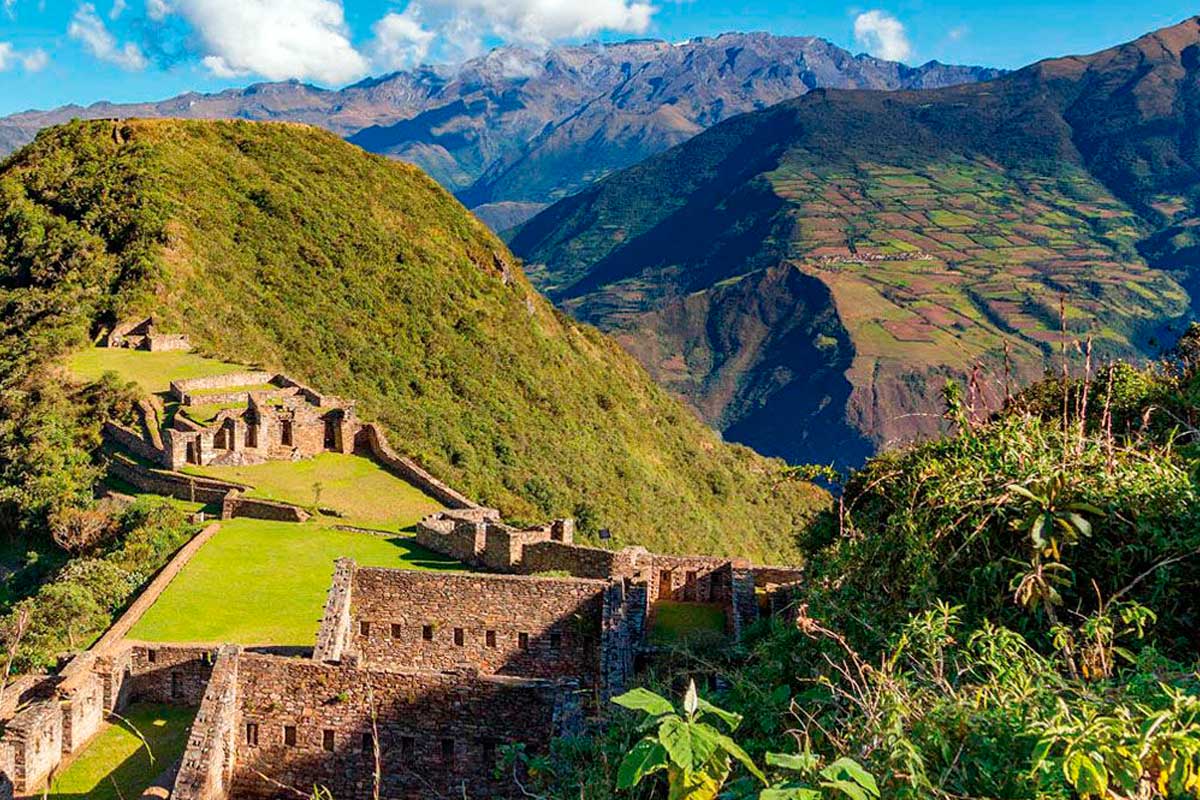
Choquequirao is one of Peru’s most impressive remote Inca archaeological sites, hidden deep in the Andes and surrounded by dramatic mountain scenery.
Many travelers have heard about Choquequirao, often called Peru’s hidden Inca city, but they are not always sure where it is located or how to get there.
Unlike Machu Picchu, Choquequirao is not reached by train or a short bus ride. Its location above the Apurímac Canyon makes the journey more adventurous, more peaceful, and more rewarding for travelers who want a real trekking experience in Peru.
This guide explains exactly where Choquequirao is located, how remote it is, how travelers reach it from Cusco, and why its location makes the experience so special.
Where Is Choquequirao Located?
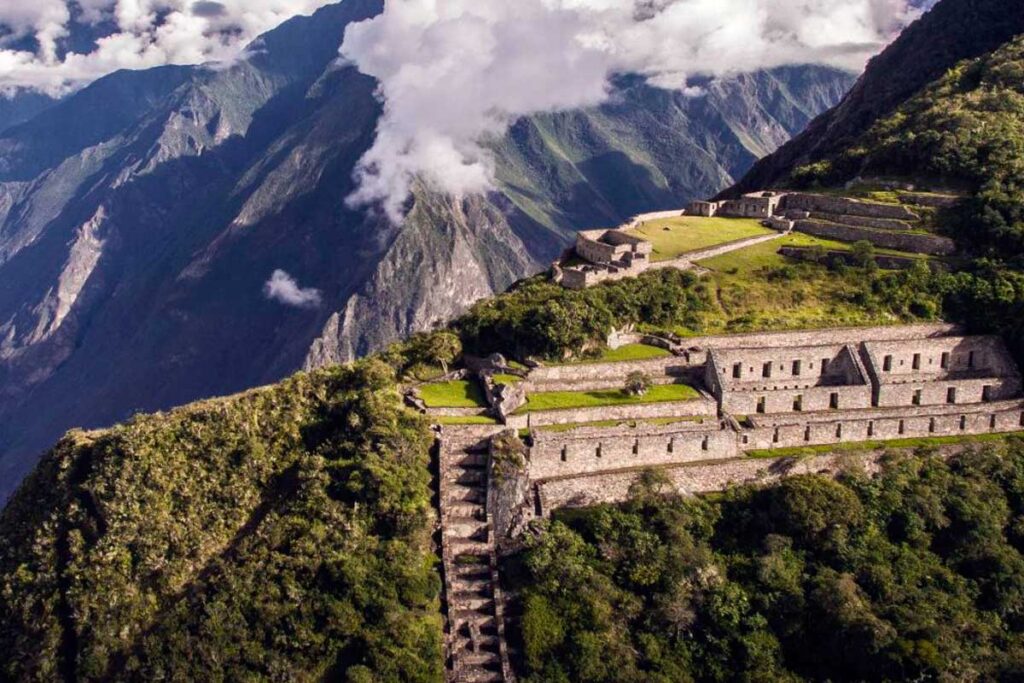
Choquequirao is located in southern Peru, in the Cusco region, within the Vilcabamba mountain range. The Choquequirao ruins location is high above the Apurímac Canyon, surrounded by steep mountains, cloud forest, deep valleys, and wild Andean landscapes.
This remote setting is one of the main reasons Choquequirao feels so different from other famous archaeological sites in Peru.
Choquequirao is not located near the city center of Cusco. It is also not connected by train, airport, or regular tourist bus. To reach the archaeological site, visitors must travel by road from Cusco to a trailhead area and then continue on foot.
That is why the Choquequirao trek from Cusco is considered one of the best adventures for travelers looking for history, nature, solitude, and a true sense of discovery.
Choquequirao Location in Peru
To understand the Choquequirao location, it helps to see where it sits in relation to other important travel points in southern Peru.
Choquequirao is located west of Cusco, above the Apurímac Canyon, in the Vilcabamba mountain range. This region is known for its dramatic geography, high mountains, deep river valleys, and important Inca routes.
Most travelers begin their journey from Cusco because Cusco is the main gateway for Choquequirao treks. From Cusco, the route usually continues by private transport toward the trailhead before the hiking section begins.
Choquequirao is not inside the Sacred Valley, although many travelers visit the Sacred Valley before or after their trek. It is also not directly beside Machu Picchu, but both archaeological sites are part of the broader Andean world of the Incas.
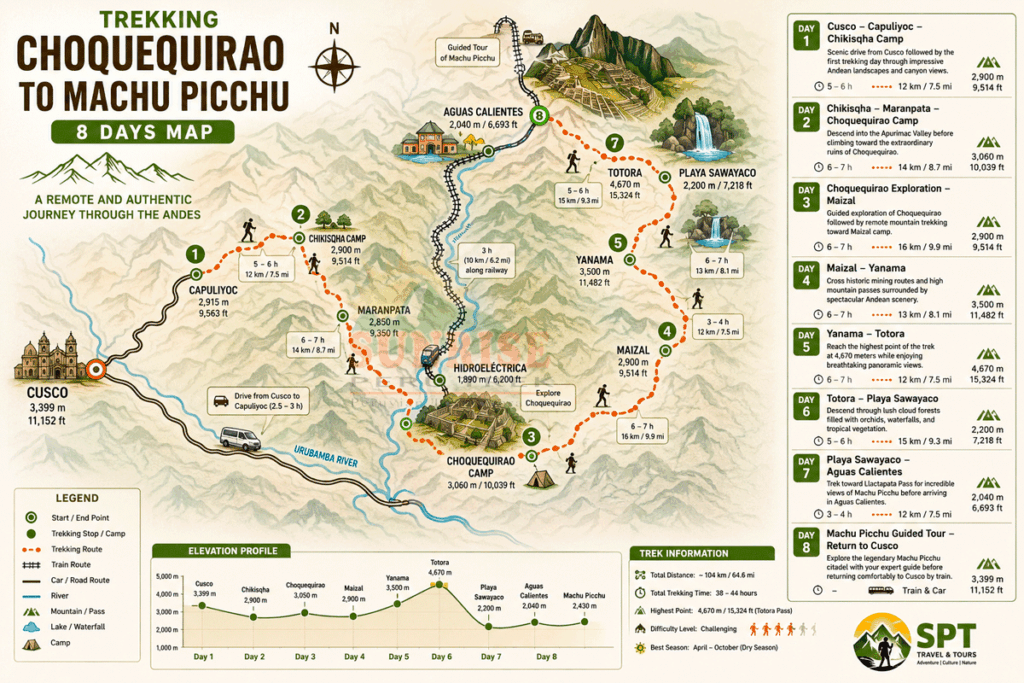
Some longer trekking routes can connect Choquequirao with Machu Picchu, but this is a demanding expedition that requires more days, strong fitness, and good planning.
How Far Is Choquequirao from Cusco?
Choquequirao is reached by a combination of road travel and trekking.
Most visitors depart from Cusco early in the morning and travel by vehicle toward the trailhead area. Common access zones include Capuliyoc, Cachora, and nearby starting points depending on the itinerary and operator.
After the road journey, the real adventure begins on foot. The trek descends into the Apurímac Canyon, crosses lower valley areas, and climbs again toward the Choquequirao archaeological site.
For first-time visitors, the most important thing to understand is simple: Choquequirao feels remote because the final access must be done by hiking.
There is no easy shortcut to the ruins. This makes the journey more challenging, but also more authentic.
Can You Drive to Choquequirao?
No, travelers cannot drive directly to the Choquequirao ruins.
There is no road entrance at the archaeological site. There is also no train station, airport, or tourist bus terminal beside the ruins.
Visitors can only reach the final area by trekking. This is one of the biggest differences between Choquequirao and Machu Picchu.
Machu Picchu can be reached by train to Aguas Calientes and then by bus to the entrance. Choquequirao, however, requires a multi-day trek through mountains and canyon landscapes.
This limited access is one of the main reasons Choquequirao remains less crowded, more adventurous, and more peaceful.
Why Is Choquequirao So Remote?
Choquequirao is remote because of its location high above the Apurímac Canyon.
The surrounding geography is powerful and challenging. The route includes steep descents, demanding climbs, deep valleys, mountain trails, and limited infrastructure.
This is not a destination designed for quick sightseeing. It is a place for travelers who want to earn the experience step by step.
But the remoteness is not a disadvantage. It is the heart of the journey.
Because Choquequirao is difficult to access, it receives far fewer visitors than Machu Picchu. This gives travelers a rare opportunity to explore an important Inca site in a quiet, natural, and deeply atmospheric setting.
Choquequirao and the Apurímac Canyon
The Apurímac Canyon is one of the most important features of the Choquequirao trekking experience.
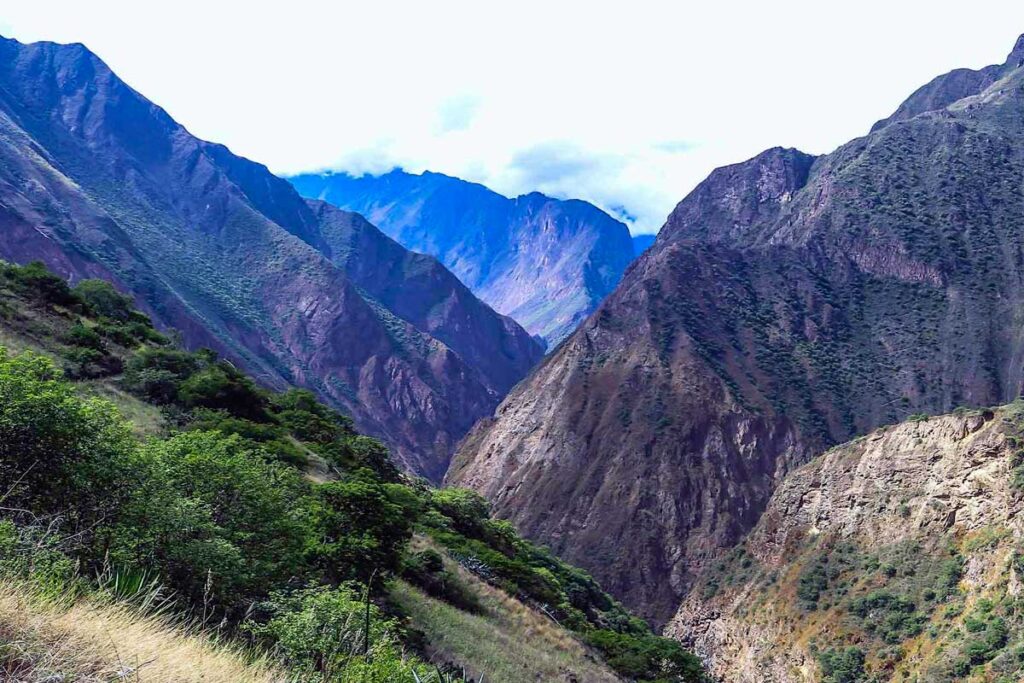
Before reaching the ruins, hikers experience dramatic canyon viewpoints, dry mountain slopes, river scenery, and challenging ascents and descents. The canyon creates the feeling of entering a hidden world far from modern roads and busy tourist routes.
The Choquequirao Apurímac Canyon route is visually powerful. The landscapes are wide, deep, and constantly changing. Travelers can see rugged cliffs, distant snowcapped mountains, cloud forest zones, and the Apurímac River far below.
For many hikers, the canyon is not just part of the route. It is one of the most unforgettable highlights of the entire trek.
Is Choquequirao Near Machu Picchu?
Choquequirao and Machu Picchu are both Inca sites located in the Andes of Peru, but they are not visited in the same way.
Machu Picchu is easier to reach because travelers can take a train to Aguas Calientes and then a bus to the entrance. Choquequirao requires a multi-day trek and cannot be reached by train or bus.
So, is Choquequirao near Machu Picchu? Geographically, both sites belong to the wider Andean Inca landscape, and some demanding trekking routes connect Choquequirao with Machu Picchu. However, for most visitors, they are separate experiences.
Choquequirao is best for travelers who want a wilder, quieter, and more adventurous journey. Machu Picchu is best for travelers who want a more accessible world-famous archaeological visit.
Both are extraordinary, but Choquequirao feels more remote and less touched by mass tourism.
What Is the Starting Point for the Choquequirao Trek?
Most Choquequirao treks begin with a departure from Cusco.
From Cusco, travelers continue by vehicle toward a trailhead area. Common access points include Capuliyoc, Cachora, or nearby trailhead zones, depending on the chosen route and itinerary.
A well-organized local agency usually arranges the private transport, professional guide, meals, camping equipment, mule support when available, and route logistics.
This is important because Choquequirao is not a simple day trip. The trek involves remote trails, changing weather, steep terrain, and limited services along the route.
Starting from Cusco with a reliable trekking team makes the experience safer, smoother, and more enjoyable.
Why Choquequirao’s Location Makes It Special
Choquequirao’s location is exactly what makes it so special.
Because it is hidden above the Apurímac Canyon and protected by difficult mountain access, the site offers something many travelers are searching for: silence, space, and a true sense of discovery.
The location gives visitors fewer crowds, dramatic Andean views, a stronger connection with nature, and a more authentic trekking experience.
You do not simply arrive at Choquequirao. You travel through the mountains, descend into the canyon, climb toward the ruins, and slowly understand why the Incas chose such a powerful place.
For adventure seekers, this is the magic of Choquequirao Peru. Its beauty is not only in the stone walls, terraces, and plazas. It is also in the journey required to reach them.
Is Choquequirao Easy to Reach?
No, Choquequirao is not easy to reach.
Visitors need good physical condition because the trek includes steep descents and climbs. The route can be demanding, especially for travelers who are not used to hiking for several days.
However, the reward is unforgettable.
At the end of the journey, travelers find a quiet Inca archaeological site surrounded by mountains, clouds, terraces, and canyon views. There are no large crowds, no train station beside the entrance, and no feeling of mass tourism.
Choquequirao is for travelers who want something deeper than a classic tourist visit. It is for people who enjoy effort, nature, history, and adventure.
Best Way to Visit Choquequirao from Cusco
The safest and easiest way to visit Choquequirao is with an organized Choquequirao trek from Cusco.
A professional local team helps manage the details that first-time visitors should not handle alone. This includes private transport, route planning, licensed guides, campsite organization, meals during the trek, mule support when available, safety assistance, and local knowledge.
A good trekking agency also helps you choose the right itinerary according to your available time, hiking experience, and fitness level.
Some travelers prefer a shorter and more intense Choquequirao trek. Others choose a more relaxed itinerary with extra time to enjoy the route, rest, take photos, and explore the archaeological site.
Because Choquequirao is remote, planning matters. The right support can make the difference between a difficult trip and a safe, inspiring, and unforgettable adventure.
Final Thoughts
So, where is Choquequirao located?
Choquequirao is located in one of Peru’s most dramatic and remote Andean landscapes, in the Cusco region, within the Vilcabamba mountain range, high above the Apurímac Canyon.
Its location is not easy. It is not fast. It is not designed for mass tourism.
And that is exactly what makes it special.
Choquequirao is a hidden Inca city in Peru for travelers who want quiet trails, powerful scenery, deep history, and a real trekking adventure from Cusco.
If you are looking for a destination that feels wild, authentic, and unforgettable, Choquequirao is one of the most rewarding journeys in the Andes.
Ready to discover Peru’s hidden Inca city?
Contact our local Cusco team and choose the best Choquequirao trek for your time, fitness level, and travel style.
We will help you plan a safe, well-organized, and unforgettable Choquequirao trek from Cusco.
FAQ: Choquequirao Location
Where is Choquequirao located?
Choquequirao is located in southern Peru, in the Cusco region, within the Vilcabamba mountain range. The ruins sit high above the Apurímac Canyon, surrounded by mountains, cloud forest, and remote Andean landscapes.
Is Choquequirao in Cusco or Apurímac?
Choquequirao is generally described as being in the Cusco region, close to the Apurímac Canyon and near the border area with Apurímac. The trekking route passes through landscapes strongly connected with both Cusco and the Apurímac Canyon.
How far is Choquequirao from Cusco?
Choquequirao is not reached by a simple direct road from Cusco. Travelers usually drive from Cusco to a trailhead area such as Capuliyoc or Cachora, then continue on foot for multiple days.
Can you drive directly to Choquequirao?
No. You cannot drive directly to the Choquequirao ruins. There is no road, train station, airport, or regular bus entrance at the archaeological site. The final access must be done by trekking.
Is Choquequirao near Machu Picchu?
Choquequirao and Machu Picchu are both Inca sites in the Andes of Peru, but they are not visited in the same way. Machu Picchu is reached by train and bus, while Choquequirao requires a multi-day trek. Some longer routes connect Choquequirao with Machu Picchu.
What is the best starting point for the Choquequirao trek?
Most Choquequirao treks start from Cusco with a road transfer to a trailhead area. Common starting zones include Capuliyoc, Cachora, and nearby access points depending on the itinerary.
Why is Choquequirao difficult to reach?
Choquequirao is difficult to reach because it is located high above the Apurímac Canyon. The route includes steep descents, climbs, remote trails, deep valleys, and limited infrastructure. This is why planning and physical preparation are important.
Is Choquequirao worth visiting?
Yes. Choquequirao is worth visiting for travelers who enjoy trekking, Inca history, remote landscapes, and fewer crowds. Its location makes the journey challenging, but also makes the experience more authentic, peaceful, and memorable.